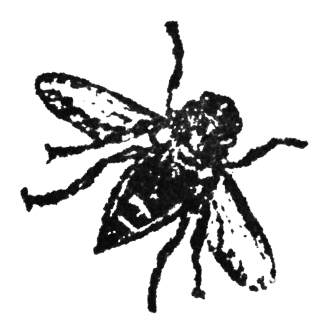
Quantum 'pooters
While vast swaths of the financial and software engineering management
words are broiled by cartoon-fight-cloud levels of mania over Large
Language Models (which are now, annoyingly and universally, referred to as
"Artificial Intelligence" because we haven't learned our lessons vis-à-vis
the relationship between
Anyways… quantum computers are one such thing. More generally, our advancing ability to observe (pun) and manipulate things that don't follow the physical properties we're used to observing. These advancements in quantum stuff unlock novel functionality that we can build on, things that didn't exist before and fundamentally couldn't be done accurately or in a reasonable amount of time. The short list of stuff I'm most excited about:
-
Laser cooling measurement of acceleration and gravity generally very practical real-world applications -
What are being referred to as
cryptographically-relevant quantum computers
by those who see a hammer. These, in concrete terms, are
quantum computers with enough memory and processing speed to do
on-the-fly memory correction. This is necessary for carrying out larger
and slower operations, as memory is only stable for a short period of
time before being observed by the
heat'n'motion of the universe. These are, in other words, the baseline
for having quantum computers that are able to perform useful
computations at any scale. Quantum computers are absolutely fascinating,
but I think we'll be deep in the era of accidental discovery for a
little longer. The big "aaaah scary!" thing is the breaking of the
Diffie-Hellman key exchange Shor's algorithm
I ramble, but the distinction I'm trying to draw is between
doing old things faster and
doing new things. We've been throwing a lot of
time, energy, and media coverage on the former, and very little on the
latter. This may be as simple as: it's easier to get clicks from
theFamiliar++ and harder to introduce and sell a topic that
introduces a new atomic function to our technology.
This makes me think about the introduction of novel atomic functionality in programming languages — something that:
- didn't exist before, and,
- whose behaviour would be impossible to reproduce within the language before its introduction.
In the ECMAScript specification, many new language features are
distillations of things that people had already written — functionality
provided by popular code libraries which was universal-enough in its
applicability to justify its inclusion in JavaScript-proper. These are
things that can be
WeakMapWeakRef
Without the fundamental support of weak references in a language, these patterns are impossible to reproduce naturally, and require some central register/unregister API, implying more boilerplate code and (often) more opportunities for memory leaks. Other times, there is no workaround, and any design/solution which requires the nonexistent tool won't work or will have unintended side-effects. In JS, this means no true polyfill can exist in a user agent (browser) which does not support the feature.
From my experience, the introduction of these fundamentally new behaviours
are (similarly) much less talked-about than those distillations of
already-possible functionality; or, at least, as-talked-about — hitting
something like a
Things tend to come together, when they do, in timely ways.
I've been reading
The care that went into this textbook led me to look up the authors and contributors, all of who live (and lived) viscerally curious lives, and sought to share that curiosity in ways that remind me of my best teachers. There is a grace in simplifying without "dumbing-down". There is humility in recognising the work-in-progress state of humanity — avoiding the egotistical trap which makes us think we are in a definitively "civilised" age of advancement, where we've "figured it out" and each new piece of the puzzle is, in fact, another cherry on top of our already-delicious cake. This is the same trap that makes us humans think we are better than everything around us; we believe ourselves to carry an intristic value to share with everything and every person around us ("person" being human or otherwise — I've seen far too many animals behave more ‘humainely’ than many homo sapiens).
Along the way, I came across a
artificial intelligence. What they resemble and
what they can recreate are some of the least intelligent and
creative parts of humanity, but it can do so at (relatively) breakneck
speeds! Wow!
[sound of lever pulling, rube goldberg machine running noisily, 1L of
freshwater being consumed, a back being pat by a plastic cartoon hand]
Am I a pessimist? Yes! However, this is pathetic! We marvel at our own accomplishments when we're at 1% progress towards recreating the performance of one of the simplest systems that already exist in nature, yet this is something that:
- can fly
- is fully autonomous
- obtains its own energy from the world around it
- runs for a day, creates more of itself, then decomposes
- weighs basically nothing
- has physical/chemical "computation" capable of sub-millisecond responses
- has sensors capable of minute motion detection
Imagine a human invention hitting three of those! The good citizen's of today's Super Earth would faint, or go into convulsions, from the sheer advancement of it all!
This is not to disregard our progress entirely. Especially on the
theoretical front, we've learned (and experimentally proven) so much
in the last 100 years, and especially last 20. We've found ways of proving
long-standing theories, particularly in quantum physics. We've
demonstrated
What is this all, in the face of an industry insistent on plowing forward
at all costs into oblivion? Do we need to
It's frustrating, to say the least. I do engineering. I'm also a person with highly refined sensing capabilities (much like the fruit fly). I can see how much suffering there is in the world, how far short we've fallen of sharing and enhancing this utopia of a planet with and for every person, human or otherwise.
We have the opportunity and duty to:
-
Rebalance our relationship with our environment. There's already
great examples out there -
Free up human time, wherever we can. We should have public (yes,
public as in public works) engineering projects to
automate every single mundane job. We have immense interdisciplinary
robotics knowledge, but it's fragmented across private companies trying
to make a buck — and most of the time, in the US, that buck looks like a
DoD contract. It need not. We could invest our money and time into
future-thinking projects that unburden our society's best thinkers from
a need to make money.
This must be balanced with some form of universal, basic income (likely as a transition to something else, though it doesn't have to be). This doesn't mean government is taking away my job! People should be as free to work as they should be free not to. It just means that people shouldn't have to work to be alive, have housing, etc. Our manufactured illusion of scarcity is just that, and we can fight against it and rewrite the script of what the day-to-day experience of everyone looks like.
This is all written from the dome of an Americabrained goofball who has been fortunate enough to travel and watch and read and listen, to experience all of the ways that people can — and do — live and think very differently than many do in the US. To read, speak, and comprehend a non-English language. I'm fortunate to have read so much science fiction that artfully and delicately introduced my spooked little monkey brain to the way we're seen from the outside; so many little moments of ‘‘hmm… they are, perhaps, talking about me/we’’ that accumulate up over time. Having enough curious people share history with me — history which paints a very different picture than the one I grew up with — and having that gentle, fiction introduction to let me be open to those novel-to-me interpretations. All in all, it's that feeling of being small. Even in our largest physical echoes, we rest tiny on the scale of time and space. As individuals, we are near-nothing. We repeat and repeat imagined-glories, ignored-mistakes, and predictable-tragedies.
That's okay. In fact, the more I learn, the more I come to feel this is the core of humanity. It can be viewed as iterations. We, as a species, learn and grow and change on time scales we, as individuals, can't possibly hope to understand. Our impacts are small beyond what we could ever know, because we are not individuals. We are a species, we are a highly-social, collective organism. Let's learn to be honest with our collective self.
What's our iteration look like right now? We (well, vulture capital,
giant tech companies, etc. — not exactly "us") are
How might such a silo look to the amateur silo-spotter, ready with camera?
-
It looks like
the best and brightest having worse individual accuracy than a coinflip 2 models, each able to solve 70% and 71% (respectively) of the problems the other missed Jaccard similarity -
It looks like a bouquet of research into
ways of test overfitting to improve benchmark scores -
It looks like all but the biggest two siloes saying that
siloes are ruining everything
We'll probably end up getting this data/weight sharing the only way we
know how: a "darkweb" (dumb term, get over ourselves) data dump from some
greyhat hacker outfit, and a bunch of poaching and contract breaches that
benefit corporations while leaving the poached employees vulnerable to
legal action. It's a pretty bleak one. Corporations wasted no time
adopting rugged individualism wholeheartedly,
after being deemed a
Don't even get me started on the whole
‘‘china winning!!’’
thing. Who cares. Yes, "they" (slap a group label on what is basically a
continent-worth of independent thinkers, sure) are presenting a highly
effective example — a bunch of open-weight models produced by
collaboration, public research, and
‘‘distillation’’
(because everything in AI needs its own term for
It's all fighting over peanuts, when accuracy is this abysmal on
any non-
†with a fallback retry on a different model
Now, 42.5% accuracy is the average across all categories for the top-scoring model (Claude), and the spread across categories is surprising. Claude scored anywhere from 65% in "Operations" (again, not sure what that is, and web searches don't help to do anything but equate it to the term "miscellanous") to a dysmal 26.67% in HR — the only one to go to Gemini instead of GPT/Claude. Notably, the top-overall scorer (Claude) had a 40% spread in accuracy across categories, having scored 25% in The H(unge)R Games (same odds as heads on two consecutive coin flips!).
Let's play around with that 42.5% accuracy for a minute. If I ask it to do 2 basic tasks in a row, I get 18% accuracy across all requested work. Three tasks? I have an 8% chance that it will have correctly done everything I asked it to do. This is the absolute best we've got right now. If I worked with someone with an 8% chance of doing 3 basic tasks correctly — or, said another way, who had one or more significant and obvious failure(s) in their work 92% of the time after doing 3 basic tasks — they would have already failed upwards directly into middle management.
There's a strong analog to flaky tests in automated code testing. If I had a test that succeeded 42.5%, and the rest of the time produced false negatives, I would have to run it (on average) 2.35 times before getting a true positive test case (if conditions were such that it should pass. If the test continued to fail, we would have to run it 6 times in order to have 95% confidence that it was an actual failure.
In the thousands of test cases that usually run, this is abysmal. Similarly, in the hundreds of tasks performed by a person in one of these roles every day, it is ridiculous to presume this level of flakiness is acceptable from a supposed drop-in replacement for human labour. ‘‘Humans make mistakes too!’’ Sure, but:
- I'm not being blasted with advertisements on the benefits of human labour, how to make humans work better for business, and the human-powered future.
- We white-collar fleshwalkers would also probably improve accuracy with a couple trillion spent on making sure we had good posture and enough sleep.
We'll keep drilling and digging, imposing and reinforcing our illusion of superiority founded in the frequency of our lived time beating faster than that of so many other species. Life is considered barely alive, not worth not-destroying, because we're too impatient to watch them move and live. We'll keep writing excuses that others are too small, too stupid, too slow, too fast, too numerous, too different, too incompatible with our ‘‘way of life’’.
Slow is a softened slur in English. ‘‘Retarded’’ is what we call people who can't keep up with the pace of social complexity, who lean outside the bell curve around the median. It's a word I type knowing others have used it to debase me and friends of mine. We are, after all, only the angriest, most-confused apes. Nobody's fault.
We'll still arguing over whether
We'll keep watching our planet get hotter, wetter, dryer, more extreme everywhere — every oscellation's peak trending a little further from neutral, the whole chart shifting a little faster each year. Maybe one year, it'll move fast enough for us to take it seriously.